

Ongoing Programmes
Care and Support Programs
Long-term, continuous services that the organization is committed to maintaining as part of its core mission.
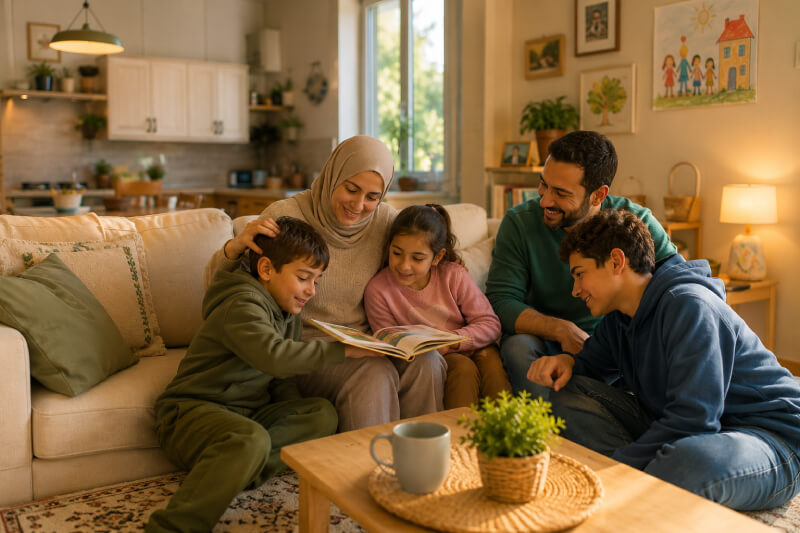
Family Houses
Family-Like Care is provided in a family setting where children live in family houses led by an alternative mother who offers daily care, affection, and stability. In this environment, children grow up together as brothers and sisters in a nurturing household that closely resembles a biological family in structure and relationships.
This care is delivered as part of an integrated, evidence-informed approach that includes accommodation, food security, education, health care, psychosocial support, empowerment, protection, and social inclusion.
Children remain in this family-like care arrangement with their alternative mother until the age of 14, after which they transition to youth houses, where they continue their development toward independence.
Family-Like Care is the foundation of the SOS Children's Villages model in Jordan and one of its most defining features, reflecting a unique approach centered on providing children with a stable, family-based environment.

Youth Houses
Young people move from family houses to youth houses at the age of 14, where they remain until they reach 18 years old. Each house is supervised by a designated youth leader who is responsible for providing care, monitoring their academic progress, and supporting the development of their life and personal skills, gradually preparing them for independent living.
Preparation for this stage begins during the final years in the family houses, where children are progressively equipped for the transition to youth houses.
This transition represents a key step in a gradual pathway toward independence. By the end of this stage, young people reach the “graduation” phase from the integrated care of SOS Children's Villages and are prepared to enter independent life within the “Supervised-independent living” arrangement.
.jpg)
Supervised Independent Living Arrangement
After the age of 18, youth enter the “Supervised-Independent Living” arrangement, where they gradually transition into full independence while continuing to receive structured support from SOS Children's Villages.
During this phase, we support them with education, vocational training, and employment opportunities. Through partners such as Al Aman Fund for the Future of Orphans, support is extended to cover education, housing, and other essential living expenses.
Our aftercare programs for young people focus on equipping them with the skills, networks, and knowledge needed to enhance their opportunities, succeed in the job market, or launch their own initiatives, ultimately promoting financial stability and long-term independence.

Advocacy
The SOS Children’s Villages Jordan Association works to strengthen advocacy efforts aimed at creating changes in policies and practices that affect the rights of children and youth, by directly engaging them in expressing their issues.
In this context, the association established a national advocacy team consisting of 15 young men and women over the age of 18, who participate in dialogues with government entities and lead initiatives such as improving the process of establishing legal parentage. It has also formed a youth council for those under 18, providing a space to develop their skills and amplify their voices.
In 2023, the association launched the Children’s Parliament, which includes children from the three villages in Amman, Irbid, and Aqaba, with the aim of empowering them to participate in decision-making and express their opinions.
.jpg)
Family Strengthening
The Family Strengthening service, launched in 2023, focuses on preventing family separation by supporting at-risk families and empowering them to provide quality care for their children. It offers a range of essential services, including educational support, parenting guidance, economic assistance, and mental health support. In addition, the program works closely with Community-Based Organizations by providing training to ensure the sustainability of services, promote co-implementation, enhance community outreach, and organize weekly family activities.
Safeguarding Children and Youth
The Jordanian SOS Children’s Villages considers the safety and well-being of children and youth to be at the core of its mission, and is committed to providing a safe environment that protects their rights and preserves their dignity through a protection system based on national laws, approved policies, and an approach of zero tolerance toward any abuse, neglect, or exploitation, while placing the best interests of the child at the forefront of priorities. We focus on prevention through awareness, training, and continuous risk assessment, while strengthening the capacities of children, youth, staff, and partners to promote safe practices across all programs. Safe and confidential reporting channels, including anonymous reporting, are available to raise any safeguarding concerns. All reports are taken seriously and addressed with appropriate action and support for those affected. We believe safeguarding is a shared responsibility. We empower children and youth to understand their rights, express their views, and actively participate in creating a safe environment for themselves and others.
.jpg)
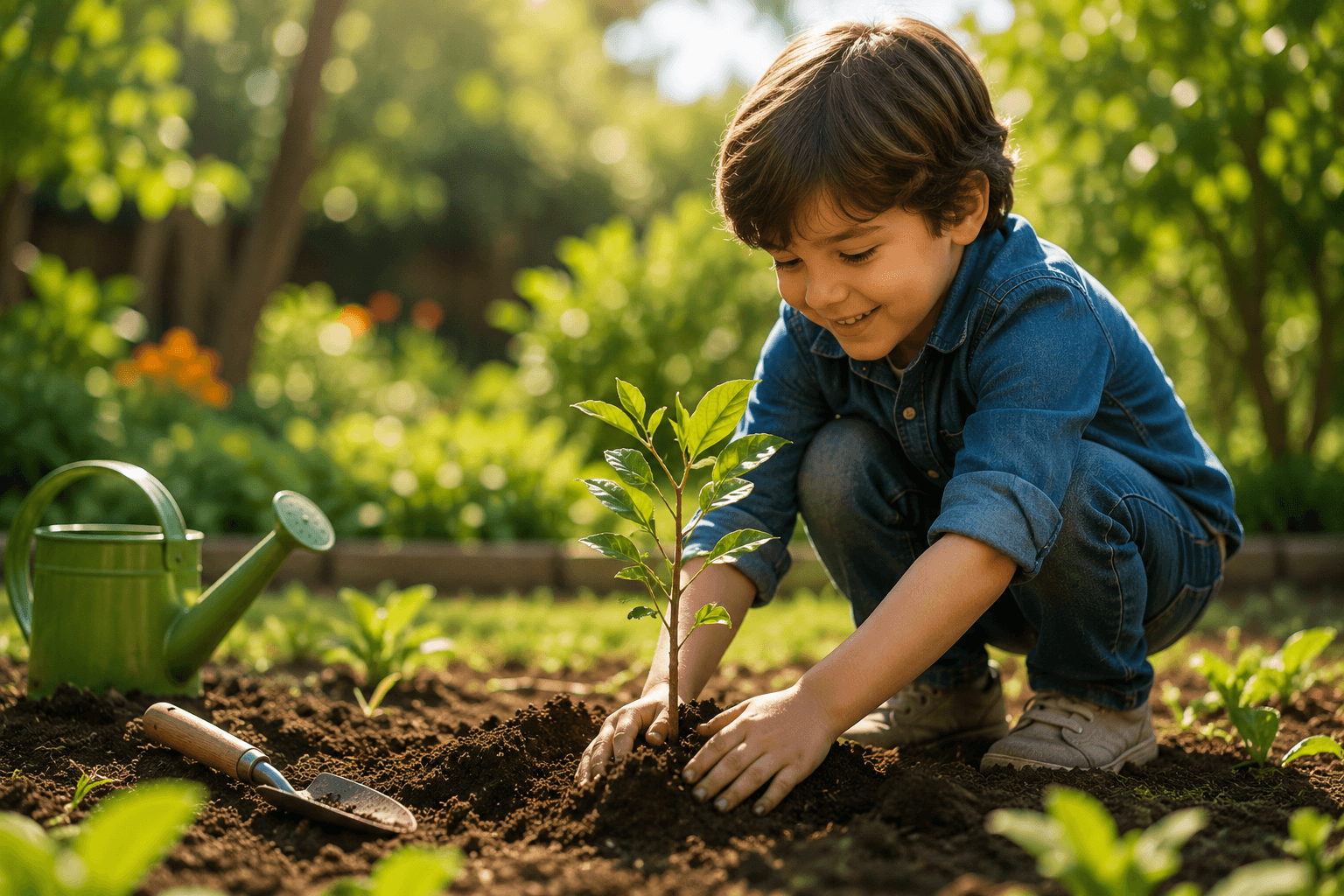
Environmental Sustainability & Our Green Transition
An integrated approach to reducing environmental impact and improving resource efficiency
SOS Children’s Villages Jordan adopts an integrated sustainability approach focused on reducing environmental impact and improving resource efficiency, while ensuring a safe and supportive environment for children and young people. This includes transitioning towards clean energy, enhancing water management through rainwater harvesting and reuse, and leveraging digital solutions to optimize operations and reduce waste. We also actively promote a culture of sustainability by engaging children and youth in practical environmental initiatives, grounded in our belief that a sustainable future begins with informed and empowered generations.
At the operational level, significant progress has been made. Solar energy systems with a total capacity of 328 kW have been installed across Amman, Irbid, and Aqaba, currently covering around 50% of electricity needs and avoiding approximately 170 tons of CO₂ emissions annually. The organization is also transitioning away from fossil fuels for heating towards high-efficiency electric solutions, including heat pumps. This work is guided by the 2023 carbon footprint baseline report, which has enabled a measurable reduction of 11.9% in emissions compared to the previous year, with a target of achieving a further 22% reduction by 2026 as part of a structured decarbonization roadmap.
kW solar capacity
electricity needs covered
tons of CO₂ avoided annually
reduction target by 2026